
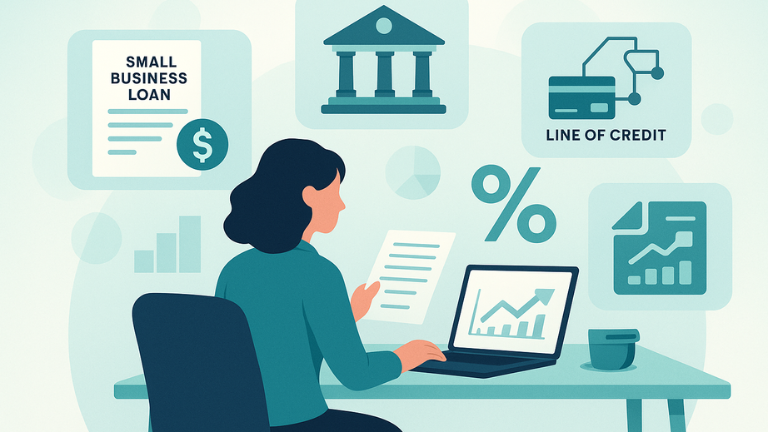
Every great business idea needs fuel to grow. Whether you’re launching a startup, expanding to a new location, or simply need to smooth out your cash flow, accessing the right kind of capital is a critical step. But walking into a bank and asking for a “business loan” is like walking into a hardware store and asking for a “tool”—you need the right one for the job.
The world of business financing can seem complex, with acronyms like SBA and a dizzying array of options. This guide cuts through the noise. We’ll break down the most common types of business loans, explain what each one is best for, and outline what lenders are looking for so you can apply with confidence.
First, Identify Your Business Need
The golden rule of business borrowing is: let the need dictate the loan. Before you even look at options, ask yourself:
· What is the specific purpose of this capital? (e.g., Buy equipment, cover payroll, expand inventory, purchase real estate)
· How quickly do I need the funds?
· How long will I need to pay it back?
Your answers will immediately point you toward the right type of financing.
Breaking Down the Most Common Types of Business Loans
Here’s a detailed look at the primary loan and credit options available to businesses.
- SBA Loans
· Best For: Borrowers seeking low interest rates, long terms, and lower down payments.
· How They Work: SBA loans are not directly from the government. Instead, the U.S. Small Business Administration guarantees a portion of the loan made by a bank or lender, reducing the lender’s risk. This makes them more willing to lend to small businesses.
· Key Types:
· SBA 7(a): The most popular, general-purpose loan. Can be used for working capital, expansion, or equipment (up to $5 million).
· SBA 504: Specifically for purchasing major fixed assets like real estate or large equipment.
· Pros: Low down payments, competitive rates, long repayment terms (up to 25 years for real estate).
· Cons: Stringent eligibility requirements, lengthy application process, and extensive paperwork.
- Term Loans
· Best For: A one-time, specific investment with a predictable cost (e.g., expanding to a second location, a large marketing campaign, a major vehicle purchase).
· How They Work: This is the “traditional” loan. You receive a lump sum of cash upfront and repay it with interest over a set period (e.g., 1-10 years).
· Pros: Predictable, fixed payments; clear payoff date; can finance large amounts.
· Cons: May require collateral; often has stricter credit requirements than alternative lenders.
- Business Line of Credit
· Best For: Managing cash flow gaps, covering unexpected expenses, and financing short-term operational needs.
· How They Work: Think of it like a business credit card without the plastic. You get access to a pool of funds up to a certain credit limit. You only draw what you need, pay interest only on the amount used, and can reuse the funds as you repay.
· Pros: Extremely flexible; perfect for managing ebbs and flows of revenue.
· Cons: Often has variable interest rates; may have annual fees.
- Equipment Financing
· Best For: Purchasing vehicles, machinery, or technology essential to your business.
· How They Work: The loan is secured by the equipment itself. If you default, the lender repossesses the equipment. This makes it less risky for the lender, often leading to easier approval.
· Pros: Easier to qualify for; the equipment acts as its own collateral; preserves other cash and credit lines.
· Cons: The equipment can become obsolete before the loan is paid off.
- Invoice Financing (or Factoring)
· Best For: Businesses (often B2B) that have outstanding invoices and need cash now instead of waiting 30, 60, or 90 days for payment.
· How They Work: You sell your outstanding invoices to a factoring company at a discount (e.g., 97% of the value). They give you the majority of the cash upfront and then collect the full payment from your customer. Once collected, you receive the remaining balance, minus a fee.
· Pros: Provides immediate cash flow based on sales you’ve already made.
· Cons: Can be expensive (high fees); involves a third party interacting with your customers.
Comparison Table: Which Loan is Right for You?
| Feature | SBA Loans | Business Lines of Credit |
|---|---|---|
| Purpose | Typically for long-term investments or major purchases (e.g., equipment, real estate). | Used for short-term financing needs, such as cash flow management or emergency expenses. |
| Loan Type | Lump sum of money that is paid back over a fixed term. | Revolving credit, where the business borrows and repays as needed. |
| Application Process | Lengthy process, with paperwork and approval typically taking several weeks. | Faster application process, usually within a few days to a week. |
| Qualification Requirements | More stringent requirements, including credit score, financial history, and business plan. | Easier qualifications, though credit score and financial health still matter. |
| Interest Rates | Generally lower, ranging from 7-9% (depending on the type of SBA loan). | Interest rates are typically higher, ranging from 10-20%, depending on the lender. |
| Repayment Terms | Fixed terms, typically 5-25 years depending on the loan type. | Flexible, with payments varying based on the amount borrowed and used. |
| Loan Amount | Typically larger loans, from $50,000 to several million dollars. | Smaller loan amounts, typically between $10,000 to $500,000, depending on the business. |
| Collateral | Often requires collateral, especially for larger loan amounts. | May or may not require collateral depending on the line of credit. |
| Use of Funds | Must be used for business-related expenses as specified in the loan agreement. | Can be used for almost any business-related expense, providing flexibility. |
| Flexibility | Less flexible as funds are disbursed in a lump sum. | Highly flexible, as businesses can draw from the line whenever needed, up to the approved limit. |
| Fees | May include origination fees, SBA guarantee fees, and other processing fees. | May include annual fees, draw fees, and interest on the outstanding balance. |
| Approval Time | Approval process can take several weeks or longer. | Approval is usually quicker, sometimes within 24-48 hours. |
| Repayment Structure | Fixed monthly payments over the loan term. | Flexible, with minimum payments required each month, but the balance can fluctuate. |
How to Qualify: The Universal Criteria Lenders Look For
While each lender and loan type has its own nuances, most will evaluate you based on these five pillars:
- Credit Score:
· Personal Credit: For new businesses, your personal credit is critically important. A score of 680+ is often a minimum for bank loans; 720+ for the best SBA rates.
· Business Credit: Established businesses should build a strong business credit profile (through Dun & Bradstreet, Experian Business, and Equifax Business). - Time in Business:
· This proves stability. Traditional banks often want to see 2+ years in operation. Alternative lenders may work with businesses as young as 6 months. - Annual Revenue:
· Lenders need proof that your business generates enough cash to repay the loan. Minimum revenue requirements can range from $50,000 to $250,000+ annually. - Collateral:
· This is an asset (business or personal) that secures the loan. If you default, the lender can seize the collateral. Not all loans require it (e.g., unsecured lines of credit), but it greatly improves your chances. - Business & Financial Documents:
· Be prepared with a solid business plan, bank statements, profit & loss (P&L) statements, and balance sheets.
Tips for a Strong Loan Application
· Know Your Numbers: Be able to articulate exactly how the loan will help your business grow and how you’ll generate the revenue to pay it back.
· Prepare a Solid Business Plan: This is your story. It should outline your market, strategy, financial projections, and team.
· Organize Your Documents Early: Don’t wait until you apply to start gathering financial statements.
· Shop Around: Compare offers from multiple lenders—banks, credit unions, and reputable online lenders.
The Bottom Line
Choosing the right business loan is a strategic decision that can propel your company forward. By matching your specific need to the right financial product and understanding what lenders are looking for, you can secure the capital you need to build, grow, and thrive.