
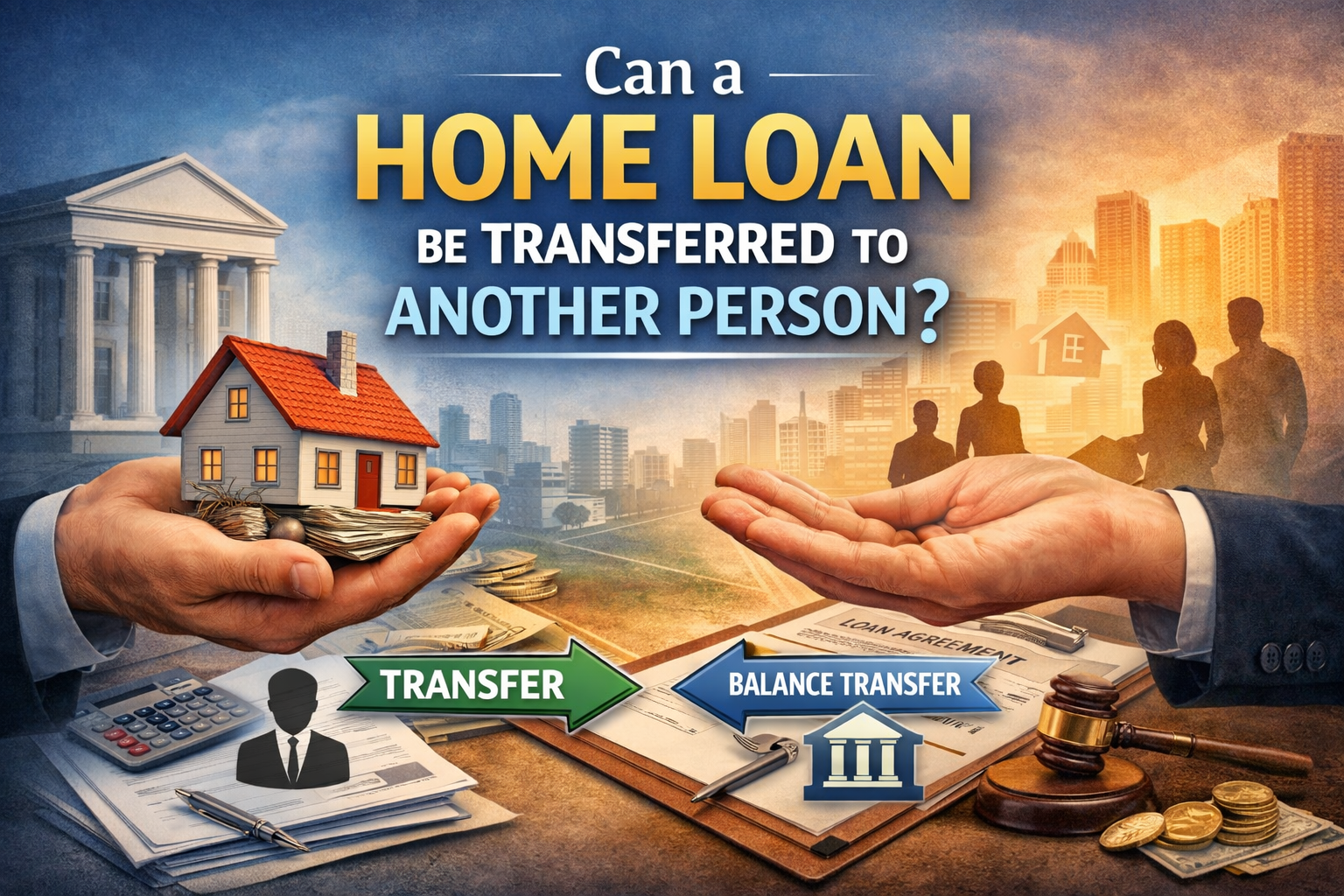
Home Loan Transfer, Balance Transfer Loans & Tax Implications Explained
Transferring a home loan sounds simple on paper: you have an existing loan, and someone else (a buyer, spouse, child, or investor) takes it over. In reality, it’s more complex – involving lender approval, eligibility checks, legal agreements, tax considerations, and sometimes an entirely new loan.
In this guide, we’ll break down, in plain language:
- When a home loan transfer to another person is possible
- The difference between loan transfer to another person vs balance transfer loans (switching lenders)
- How interest rates, loan tenure, EMI, and tax benefits are affected
- What lenders like banks, NBFCs, or players such as Bajaj Finserv typically look for
- Costs, risks, and a practical checklist before you sign anything
This is a general, educational overview – real-world rules vary by country and lender, so always confirm the exact policy with your financial institution. pasted
1. Two Very Different Ideas: Transfer to Another Person vs Balance Transfer
Before we dive into “Can we transfer a home loan from one person to another?”, we need to separate two often-confused concepts:
1.1 Home loan transfer to another person (change of borrower)
This is when you want to replace the original borrower with a new borrower:
- Example: You sell your flat, and the buyer wants to “take over” your existing home loan instead of taking a fresh one.
- Example: You want to transfer the loan from you to your spouse or adult child.
Here, the borrower changes. The property ownership, loan liability, legal documents, and often tax benefits all move (fully or partly) to the new borrower.
This is closer to a mortgage transfer or loan portability between borrowers than a simple interest rate switch.
1.2 Home loan balance transfer (change of lender)
A balance transfer loan is when you shift your outstanding home loan from one lender to another lender for better terms, like lower interest rates or improved repayment options.
- Example: You transfer your home loan from one lender to another to reduce your EMI.
- Example: You move your loan to Bajaj Finance Home Loan or another lender offering lower interest rate and better customer support.
Here:
- The borrower stays the same.
- Only the lender changes.
- The new lender may offer a top-up loan, flexible repayment options, or improved repayment terms.
This is often called refinancing, loan takeover, or loan portability.
2. So, Can a Home Loan Be Transferred to Another Person?
Short answer
Yes, but only if the lender agrees and specific conditions are met.
A home loan is a legal agreement between the lender and the original borrower. You cannot unilaterally transfer it to another person the way you transfer a phone bill. The lender must:
- Assess the new borrower’s eligibility
- Confirm their creditworthiness and repayment capacity
- Update legal documentation, charges, and property-related records
If the lender is not comfortable with the new borrower, the transfer won’t be approved.
3. Common Scenarios Where Transfer to Another Person Is Considered
3.1 Sale of the property with loan takeover
This is one of the most common practical cases:
- You’re the original borrower, selling the property.
- The buyer doesn’t want a brand-new loan; instead, they want to take over your existing home loan because:
- The interest rate is low
- Remaining loan tenure suits them
- They want to save on processing fees or other costs
How it usually works:
- Buyer and seller agree that the home loan transfer will be part of the sale.
- The buyer applies to the lender to become the new borrower.
- The lender evaluates:
- Buyer’s income stability
- Credit score and creditworthiness
- Existing debts and EMI obligations
- If approved, a new legal agreement is signed, and the original borrower is released from the obligation.
Note: Some lenders prefer that the buyer take a fresh home loan instead of taking over the old one. Others may allow the loan transfer only within certain products or under strict eligibility criteria.
3.2 Family transfers (spouse, children, joint borrowers)
In some cases, a borrower may want to add/remove a co-borrower or fully transfer home loan from one individual to another within the family:
- From husband to wife (or vice versa)
- From parent to adult child
- Between legal heirs after inheritance or a family settlement
Lenders may allow this if:
- Property ownership is aligned (the new borrower must also be an owner or co-owner of the property).
- Proper documentation, gift deeds, or transfer deeds are executed.
- The new borrower meets the lender’s eligibility criteria for income and credit score.
However, full substitution of the borrower still needs consent from the lender and updated legal documents such as the deed of trust, mortgage deed, or similar security documents depending on the jurisdiction.
3.3 Transfers in special circumstances
In rare or special cases, such as:
- Death of the original borrower
- Court orders
- Business restructurings or partnership dissolutions
The lender may allow the loan liability to shift to another person (often a legal heir, co-borrower, or co-owner), but this is governed by:
- Legal agreements
- Local property laws
- Lender’s internal policy
4. What Lenders Look At Before Approving a Transfer to Another Person
Transferring your home loan to a new borrower is almost like processing a new loan. The lender will typically re-evaluate everything.
4.1 Eligibility & creditworthiness
Key factors often include:
- Credit score & credit history
- Existing EMIs and overall repayment capacity
- Income stability (job, business, profession)
- Age and remaining working life (to align loan tenure)
An Eligibility Calculator or Affordability Calculator offered online by many institutions can give a first-level idea of whether the new borrower qualifies for the desired home loan amount.
4.2 Property ownership and documentation
Lenders need to ensure:
- The new borrower is (or will become) a legal owner or co-owner of the property.
- All property documents, title, lien, and registration details are in order.
- Any necessary stamp duty on transfer, registration charges, and legal charges are paid.
If the property title is messy, the lender may refuse the transfer and insist on formal clean-up or even foreclosure.
4.3 Principal outstanding and loan terms
The lender will look at:
- Principal outstanding (the remaining loan amount)
- Existing interest rate, EMI and the amortization schedule
- Balance loan tenure
They may offer:
- A revised interest rate (higher or lower than before)
- A change in monthly instalments (EMIs)
- New repayment terms and conditions
Think of it as the lender re-underwriting the risk, just with a different person.
5. Home Loan Balance Transfer vs Transfer to Another Person
Because these are confused so often, let’s compare them side by side:
| Aspect | Transfer Home Loan to Another Person | Home Loan Balance Transfer (Loan from one lender to another) |
|---|---|---|
| Who changes? | Borrower | Lender |
| Use case | Sale, family transfer, legal settlement | Lower interest rate, better terms, consolidate debts |
| Key checks | New borrower’s credit score, income, ownership | Same borrower; interest rates, savings vs costs |
| Documents | Property transfer deeds, new legal agreement, KYC, income proofs | KYC, loan statement, foreclosure letter from original lender |
| Tools | Eligibility Calculator, legal advice | EMI Calculator, Refinance Calculator, affordability tools |
| Tax impact | Major – tax benefits may shift to new borrower | Same borrower, usually tax benefits continue with new lender |
6. Costs Involved in Any Home Loan Transfer
Whether you’re:
- Transferring your home loan to another person, or
- Doing a home loan transfer to another lender
…you must consider the costs involved such as processing fees and other charges.
6.1 Processing fees and administrative costs
Lenders may charge:
- Processing fees for evaluating the new borrower or the transfer
- Administrative costs for paperwork, verification, and account changes
Even small percentages can add up if the principal outstanding is large.
6.2 Legal charges, stamp duty, and closing costs
Costs can include:
- Legal charges for drafting new agreements
- Stamp duty on property transfer or modification of the deed
- Title search, appraisal process, and valuation charges
- In some countries, closing costs, loan origination fee, and title insurance
6.3 Foreclosure penalties and prepayment penalties
If you’re doing a balance transfer:
- The original lender may charge foreclosure penalties or prepayment penalties, especially for certain fixed-rate loans or earlier vintages of home loans.
- The new lender might offer lower interest rates but also charge fresh processing fees.
This is why it’s essential to:
- Compare the savings from lower interest rates
- Subtract the costs involved such as processing fees, penalties, and legal charges
- Use an EMI Calculator and Refinance Calculator to see if the transfer can reduce your total outgo and EMIs.
7. How a Transfer Affects Interest Rates, EMI, and Loan Tenure
7.1 Interest rates and Policy Repo Rate
Modern home loans are often linked to a policy repo rate or other benchmark. When you do a loan transfer (either to another person or another lender), the new lender may:
- Reprice the loan at their current interest rate
- Offer lower interest rates if your profile or the new borrower’s profile is stronger
- Adjust the loan slab and pricing based on income, credit score, and risk category
7.2 EMI, monthly instalments, and repayment options
When the new borrower takes over:
- EMIs might reduce if the interest rate or tenure changes
- Or EMIs may increase if the tenure is shortened
Some lenders offer flexible repayment options, such as:
- Step-up EMIs (lower now, higher later)
- Step-down EMIs (higher now, lower later)
- Bullet payments or partial prepayments allowed with minimal hidden charges
7.3 Impact on loan tenure and repayment terms
New lender or new borrower = room to renegotiate:
- You can extend the loan tenure to lower EMIs (but pay more interest over time)
- Or shorten the loan tenure to reduce total interest, if repayment capacity is strong
Always run the numbers with an EMI Calculator or Affordability Calculator to ensure the repayment terms work for your financial stability.
8. Tax Benefits and Tax Implications of Transferring a Home Loan
This is a big area people forget about.
Important: Tax laws differ by country and may change; always confirm with a tax advisor or CA/CPA in your jurisdiction.
8.1 When the borrower changes (transfer to another person)
If you transfer the home loan to a new borrower:
- The original borrower usually loses the tax benefits associated with interest and principal repayment from the date of transfer.
- The new borrower, if also a legal owner of the property and actually paying the EMIs, may become eligible for home loan tax benefits (as per local law).
Key points:
- Tax benefits are typically linked to both ownership and interest/EMI payment.
- If the new borrower is just “on paper” and not actually paying, tax benefits may be denied.
8.2 When you do a balance transfer to a new lender
In a home loan transfer from one lender to another (same borrower):
- Generally, your tax benefits continue as usual because:
- The property and borrower haven’t changed
- The purpose of the loan (home purchase or construction) remains the same
You’ll just need:
- Loan statements from the new lender for tax filing
- Proof that EMIs are being paid regularly
8.3 Top-up loan and tax benefits
If, during the transfer, the new lender offers a top-up loan, tax treatment depends on how that top-up loan is used:
- If used for home improvement or renovation, it might be eligible for some tax deductions.
- If used for other personal purposes (e.g., travel, business, car), tax benefits may be limited or unavailable.
Always clarify with your tax advisor before using a top-up loan.
9. Comparing Different Lenders and Their Transfer Policies
Since each lender may have different policies on:
- Home loan transfer to another person
- Balance transfer policies
- Processing fees and legal charges
- Eligibility criteria and documentation
…you should compare carefully rather than assume all lenders behave the same.
9.1 What to look for when comparing lenders
When you evaluate banks, NBFCs, or housing finance companies (including well-known brands like Bajaj Finserv or others), check:
- Interest rates & mortgage rates
- Is the rate truly lower, or only for a teaser period?
- Is it fixed-rate mortgage, adjustable-rate mortgage (ARM), or a mix?
- Processing fees and other charges
- Flat fee vs percentage of principal outstanding
- Any no hidden charges promise – read the fine print.
- Legal and administrative process
- How complex is the underwriting and appraisal process?
- Who pays for valuation, title search, and legal opinion?
- Foreclosure and prepayment rules
- Are there prepayment penalties?
- Are part-prepayments allowed easily?
- Customer service and support
- How responsive is the lender during the transfer process?
- Is customer support easy to reach for queries about EMI, tenure changes, or statement requests?
9.2 Use technology to compare
Many lenders provide tools such as:
- EMI Calculator – to estimate new EMIs under different interest rates and loan tenure.
- Refinance Calculator – to calculate savings from moving your loan from one lender to another.
- Eligibility Calculator – to quickly check if the new borrower qualifies for the desired home loan amount.
These tools help ensure the transfer is not just emotionally appealing (“better rate!”) but financially sound.
10. Step-by-Step: How to Qualify for a Home Loan Transfer (to Another Person)
If you’re specifically exploring how to qualify for a home loan transfer to another person, here’s a practical roadmap:
- Talk to your current lender first
- Ask if they allow home loan transfer to another person.
- Confirm basic eligibility criteria and documentation.
- Identify the new borrower and align property ownership
- Ensure the new borrower is or becomes a co-owner or sole owner.
- Arrange necessary sale deeds, gift deeds, or transfer documents.
- Check credit score and financial stability of the new borrower
- New borrower should review their credit score and clean up any issues if possible.
- Gather financial documents: payslips, tax returns, bank statements, business proofs, etc.
- Run numbers using calculators
- Use an EMI Calculator and Affordability Calculator to ensure the EMIs are affordable for the new borrower.
- If considering a balance transfer plus borrower transfer, also use a Refinance Calculator.
- Submit application and documentation
- New borrower applies formally, like for a fresh loan.
- Lender conducts underwriting, property valuation, and legal checks.
- Review legal agreement carefully
- Check repayment terms, interest rate type (fixed/variable), foreclosure penalties, hidden charges, and loan tenure.
- Clarify responsibilities for insurance, escrow account, taxes, and property maintenance.
- Get clear written confirmation of release
- The original borrower should receive written confirmation that they’re fully released from liability after the transfer.
- Ensure all lien and deed of trust records are updated.
11. FAQs About Home Loan Transfer to Another Person
Q1. Can we transfer a home loan from one person to another?
Yes, but only with lender approval.
The lender must agree to replace the original borrower with a new borrower, based on eligibility, creditworthiness, and proper property ownership documentation. You cannot force the lender to accept a new borrower.
Q2. Is it worth transferring my home loan?
It depends on:
- Whether you’re changing the borrower (e.g., sale, family transfer) for legal/financial reasons, or
- Doing a home loan transfer from one lender to another to get better terms.
You should consider the costs involved such as processing fees, legal charges, and potential penalties, and compare them with the savings from lower interest rates or improved repayment terms.
Q3. Are there any charges for home loan transfers?
Yes. Typical charges may include:
- Processing fees
- Administrative costs
- Legal charges and stamp duty
- Possible foreclosure penalties or prepayment penalties with the original lender
Always request a full cost sheet to ensure there are no hidden charges.
Q4. How does a home loan transfer affect my credit score?
- If you are the original borrower and the loan is properly transferred and closed in your name, it can be neutral or even slightly positive because your old loan will show as closed.
- For the new borrower, the transferred loan appears as a new credit obligation, impacting credit score based on timely repayment going forward.
If there are missed EMIs during the transfer process, both parties’ credit profiles can be affected, so coordination is crucial.
Q5. What documents are needed for a home loan transfer to another person?
While it varies by lender, common documents include:
- KYC documents of the new borrower (ID, address, photos)
- Financial documents: income proof, tax returns, bank statements
- Property documents: title deeds, previous loan documents, NOC from the original lender
- Legal documents for property ownership transfer (sale deed, gift deed, family settlement, etc.)
Always ask the lender for a home loan transfer checklist.
Q6. What are the benefits of transferring my home loan?
Key benefits may include:
- Lower interest rates and reduced EMI
- Improved repayment terms or more flexible repayment options
- Possibility of a top-up loan for renovation or other needs
- Shift to a lender with better customer service
But these must be weighed against the costs involved during the transfer.
12. Conclusion: When Does a Home Loan Transfer Make Sense?
To wrap it up:
- Transfer of a home loan to another person is possible, but only with consent from the lender, proper documentation, and a thorough eligibility check for the new borrower.
- A home loan balance transfer (changing lenders) is a different process focused on better interest rates and terms, not a change of borrower.
- Before you move ahead, always:
- Compare interest rates, costs, and repayment terms
- Use tools like EMI Calculator, Refinance Calculator, and Eligibility Calculator
- Factor in tax benefits, legal charges, and foreclosure penalties
- Carefully read every clause in the legal agreement
If the numbers work out, the documentation is clean, and the new borrower is strong, a well-planned home loan transfer can reduce your costs, improve cash flow, and simplify your financial life.